Real estate farming with addressed postcards in Canada
October 16, 2026
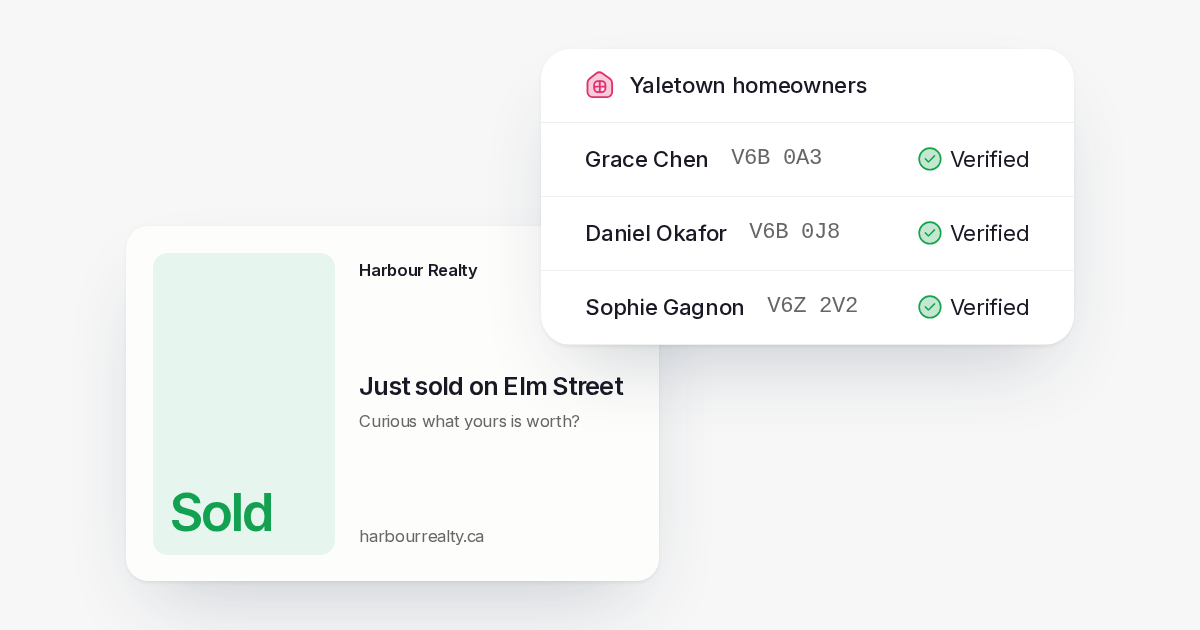
Plan real estate farming in Canada with an addressed list. Choose a neighbourhood, prepare useful postcards and budget for printing and postage over time.
Real estate farming means building relationships in a chosen neighbourhood through regular, useful contact. With addressed postcards, you can share listings, recent sales and local market updates with the homeowners on your list.
Start with an area you know, a list you can maintain and a mailing plan you can afford to continue. Each postcard should give a homeowner something relevant to read and a clear way to contact you.
Decide which homes you want to reach
Choose an area where you can provide useful local advice.
Consider where you've worked, where you have current listings and which properties you understand. A smaller area you can describe accurately gives you more to say than a broad territory you only know from a map.
Look at recent listing activity and completed transactions using the information your brokerage makes available. Note the property types, the questions owners ask and whether the area fits the services you offer.
Home counts can help you estimate the size of the audience. Statistics Canada's population and dwelling counts by forward sortation area provides census context for postal areas. Those counts aren't a current mailing list and don't identify owners who are ready to sell.
Use them to understand an area, then budget from the contacts you can actually mail.
Choose an addressed mailing approach
Postal products have different requirements. Neighbourhood Mail is an unaddressed option; an addressed mailing uses recipient details supplied with the campaign.
Direct Mailer sends addressed postcards and letters. You provide a recipient name or company and a complete Canadian mailing address. It doesn't provide blanket delivery to every home in a postal area.
Build your plan around the product you are using. A postal-area filter can narrow an existing contact list. It doesn't supply missing addresses or turn that list into a complete neighbourhood database.
Build and maintain your farm list
Start with the contacts you already have a reason to keep in touch with, such as past clients and people who have asked for property updates. Review the information against your organization's requirements before using it for a mailing.
Keep the recipient name, street address, unit, city, province and postal code together. Use a field for the neighbourhood or relationship when that helps you decide what to send.
Document where the information came from and keep contact preferences current. If you use a purchased list, check its permitted uses and how it was collected before importing it. Direct Mailer doesn't sell homeowner lists.
You can prepare real estate postcards sent to every home on your list, subject to address checks and do-not-mail exclusions. Import your contacts, group them by postal area or your own fields and review the recipients before each campaign.
Addresses change. Correct the record when a client tells you they've moved. If a card returns to the return address you provided, mark it returned in Direct Mailer. That records the return and puts the contact on do not mail for future list and segment sends.
Give each postcard a useful message
A calendar helps you plan the work, but the message should follow what is happening in the neighbourhood.
| Occasion | What the postcard can explain | A clear next step |
|---|---|---|
| A new listing | The property, its relevant features and how to learn more | Contact you about the listing |
| A completed sale | The property and an accurate description of the sale | Ask about selling a similar home |
| A local market update | A defined area and period, with the source of the figures | Discuss how the information relates to their property |
| An open house | The property, event details and who to contact | Ask a question or arrange a visit |
| Keeping in touch with past clients | A relevant local update or an offer of help | Contact you with a property question |
Use property information and images you are authorized to publish. Check the details before preparing artwork, especially when a listing or event can change between design and mailing.
For market updates, show the period and area behind a statistic. Avoid making an area-wide average sound like a valuation of the recipient's home.
Keep the contact details easy to find. A homeowner shouldn't have to search a busy card to work out who sent it or how to ask a question.
Choose a format before preparing artwork
Listing photos need room, and your address side needs clear space for addressing and postage. Choose the postcard format before arranging photos, text and contact information.
Use the postcard size guide to compare supported dimensions, standard and oversize limits, bleed and safe areas. A larger design can fit more content, but it also changes printing and mailing costs.
Give the card a focused purpose. If the photo, market chart, biography and service list all compete for attention, decide which information belongs in this mailing and save the rest for another conversation.
Direct Mailer prints the artwork you provide. Prepare it in your own design software and review the finished file before submitting it. There isn't a built-in design editor or a managed creative service.
Budget for the mailing plan you can maintain
Work from the number of eligible contacts, the format you choose and how often you plan to mail. Then add the creative and list-preparation costs you expect to incur.
The planning calculation is:
Annual mailing budget = sum of each planned mailing's recipient count × its per-recipient rate + creative and list costs
Calculate each mailing separately when the audience or format changes. A campaign to past clients may have a different recipient count from a listing announcement.
Our direct mail cost guide explains how printing and postage fit into the budget. Direct Mailer's per-piece rates include printing, addressing and postage. Use the current rate for your selected plan and format rather than carrying an old estimate into a new campaign.
Choose a cadence you can fund and prepare properly. If the budget doesn't support the whole area, narrow the audience. Keep enough time between planned mailings to review address changes, enquiries and the next message.
Record the conversations the mailing starts
Decide how you'll recognize a response before sending. Ask callers how they heard about you, note replies in your CRM and record the campaign associated with an enquiry when you know it.
Separate enquiries, appointments and signed clients in your records. They describe different stages of the relationship. A call asking about a listing isn't the same result as an instruction to sell a property.
Use mailing activity to understand when to look for responses. Direct Mailer shows printing progress and when postcards are handed to Canada Post, with estimated arrival dates. It doesn't provide ordinary-mail delivery confirmation, call tracking or sales attribution.
Review your own enquiry and client records alongside campaign spending. Be clear when the connection is based on what a homeowner told you, a matching contact record or an assumption.
Questions about real estate farming postcards
How often should I mail my farm?
Choose a schedule based on your budget and the useful updates you can provide. A regular plan can help you prepare, but a calendar slot alone isn't a reason to repeat the same offer. Record each mailing so you can vary the message.
Can I select a postal area and reach everyone there?
Only if your own addressed list contains the people you want to reach. Direct Mailer's segments filter existing contacts. They don't find homeowners or provide a complete list of every home in an area.
Can I schedule the whole plan in advance?
You can schedule individual mailings to lists or saved segments. Review the audience and content before submitting each campaign. Direct Mailer doesn't automatically create a new postcard when a listing appears or a property sells.
What should I check before using sale claims?
Have your brokerage review the property details, images, permissions and advertising wording using the requirements that apply to your practice. Use claims you can substantiate and keep the source with the approved artwork.