Canada Post stamp prices and what changes your postage
October 15, 2026
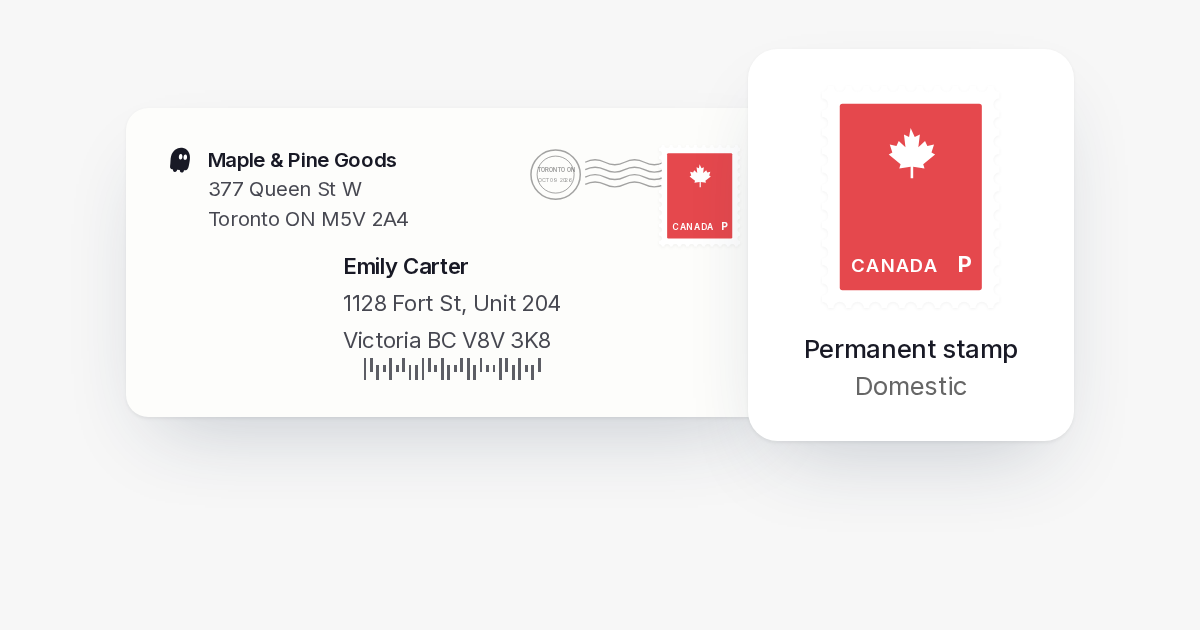
Canada Post stamp prices depend on size, weight and destination. Learn how Permanent stamps work, check current rates and budget for postcards or letters.
Canada Post stamp prices depend on where you’re sending, the size and weight of your mail, and whether you buy a single domestic stamp or stamps in a booklet or coil. Check your finished envelope or postcard before buying postage. A larger card can move into a different rate category even when the message stays the same.
Use the Canada Post postage calculator to check your mailing against the current data. If you’re comparing an old campaign with a new one, record the service and effective date alongside the rate. “The price of a stamp” leaves too much out to make a useful comparison.
Find the right stamp for your mail
Start with your destination. Domestic, U.S. and international mail have different rate tables. Then weigh and measure the finished item, including its envelope and any enclosures.
Canada Post’s stamp prices page separates standard mail from non-standard and oversize mail. It also distinguishes buying a single domestic stamp from buying domestic stamps in booklets. Those are different purchase options, so keep the same option when comparing dates.
For a campaign, save the details you used to calculate postage. That gives your team a repeatable specification when you reorder.
| Detail to record | Why you need it |
|---|---|
| Destination | Determines the domestic or international table |
| Finished dimensions | Determines whether the item meets the size category |
| Total weight | Determines the applicable weight band |
| Stamp purchase option | Keeps single-stamp and booklet comparisons consistent |
| Effective date | Shows which published schedule you used |
Permanent stamps keep their domestic value
A Permanent stamp carries a P instead of a printed monetary value. Canada Post accepts it at the current domestic postage rate, including after a rate increase. Older stamps with printed values can also be used when their combined value covers the required postage. Canada Post explains both options on its stamp guidance page.
Check the item you’re mailing before using a Permanent stamp on its own. Its continuing value does not make every envelope or postcard eligible for the standard domestic rate. Weight, dimensions and destination still apply.
If your team already has stamps in a drawer, identify what they are before purchasing more. Keep Permanent stamps separate from stamps with printed values so the person preparing the mail can apply the correct postage.
Compare changes using the same service
A useful Canada Post stamp price history needs more than a list of amounts. The definition of the item must stay consistent across the series.
Keep these distinctions visible when you review historical records:
- Domestic letters and international letters belong in separate comparisons.
- Single stamps and stamps sold in booklets should keep separate labels.
- The rate’s effective date matters more than the date an announcement appeared.
- Changes in weight limits or service definitions can break a comparison.
A nominal series shows the published amount at each date. An inflation-adjusted series expresses those amounts in the purchasing power of a chosen reference period. It needs a named inflation index, a consistent period and a calculation that readers can reproduce.
Check postcards against the size rules
Postcards appear in Canada Post’s standard-mail category when they meet its specifications. A postcard does not get a special universal stamp rate because it has a photo on the front.
Choose your format before finalizing your budget. Measure the card you intend to print, check its weight and confirm the destination. A larger format gives you more room for a listing photo, a product image or a clear offer, but it may change postage.
When comparing formats, include printing in the calculation. A lower postage category cannot tell you the complete cost of producing and mailing the card.
Compare a stamp with a managed mailing
Buying stamps is one part of doing the mailing yourself. Your team also needs to print the design, prepare the address block, check the list and get the mail into Canada Post’s network.
Commercial mailing services can use different payment methods and preparation requirements. A commercial rate should be compared with the service it buys, the qualifying volume and the work the sender still needs to do.
Direct Mailer’s bulk postcard pricing includes printing, addressing and postage. Check the current plan and format before budgeting. The word “bulk” does not mean your campaign receives a particular Canada Post commercial service or a guaranteed discount.
Keep the next campaign easy to price
Save the format, finished weight, destination, quantity and rate source with your campaign records. Before the next send, check them against the current schedule rather than copying the old total.
If you’re ordering printing separately, ask the printer for the finished specifications before buying stamps. If you’re using an all-in provider, confirm what the quoted rate includes. That gives you a budget based on the mail you will send.