Canada Post postage rates for Canadian business mail
October 15, 2026
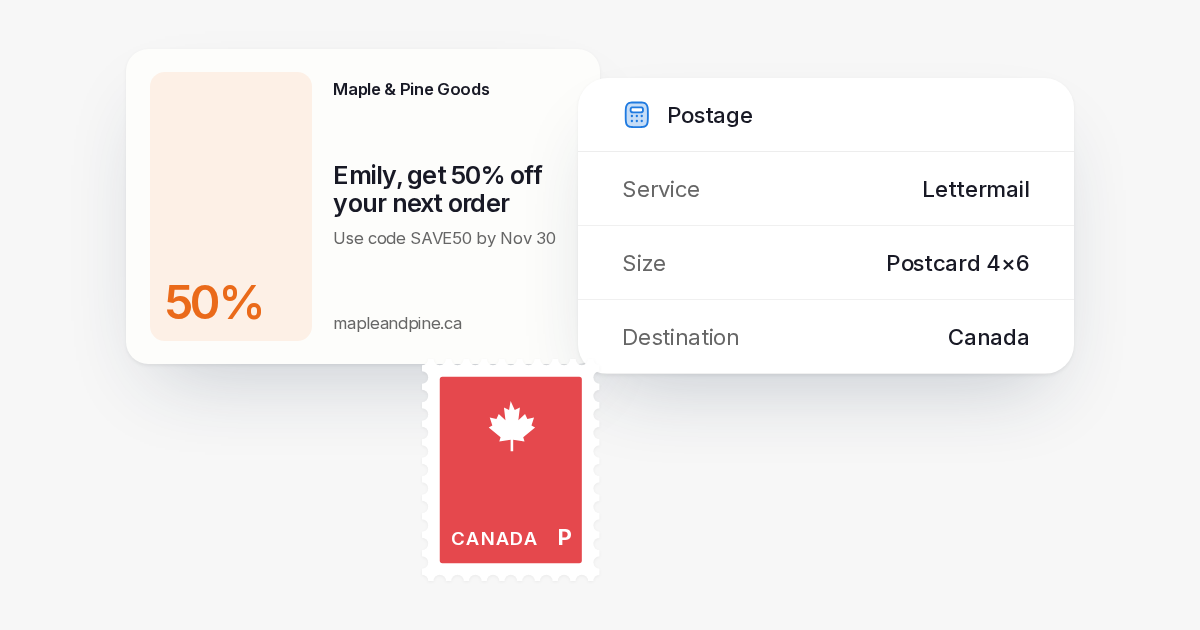
Canada Post postage rates vary by service, size and weight. Compare stamp and commercial-mail requirements, check effective dates and price your next send.
Canada Post postage rates depend on your service, destination, size, weight and payment method. For a business campaign, first decide whether you’re mailing to an address list or covering a delivery area. Then check the current schedule for the format you plan to send.
Enter your specifications in the Canada Post postage calculator. Keep postage separate from printing and preparation when comparing options. A postal rate buys a mailing service; it does not automatically include your design, printed cards or list preparation.
Check the service before comparing rates
Lettermail, Personalized Mail and Neighbourhood Mail serve different purposes. Their prices should be compared alongside their audience and preparation requirements.
| Service | Audience or use | What to check |
|---|---|---|
| Lettermail | Addressed letters and eligible cards | Destination, dimensions, weight and payment option |
| Personalized Mail | Qualifying addressed promotional mail | Content eligibility, machineability, preparation and minimum volume |
| Neighbourhood Mail | Unaddressed distribution to selected delivery areas | Route selection, format, weight and current service availability |
A customer win-back campaign starts with people you already know. An area campaign starts with the delivery geography you want to cover. Buying the lowest listed postage does not make those audiences interchangeable.
Direct Mailer sends addressed postcards and letters. It does not sell Neighbourhood Mail.
Lettermail uses size and weight bands
Canada Post publishes separate tables for standard mail and non-standard or oversize mail. Its stamp prices page lists the current categories and distinguishes domestic, U.S. and international destinations.
For domestic standard mail, the published bands include up to 30 g and over 30 g up to 50 g. Larger or heavier items move to other categories. Weigh the complete item, including its envelope and enclosures, rather than using the number of sheets as a precise measurement.
A domestic postcard can qualify as standard mail when it meets the applicable specifications. Adding space for a larger photo or more copy may change its category. Choose the finished dimensions before approving the design.
Personalized Mail has preparation requirements
Canada Post’s Personalized Mail price sheet, effective March 23, 2026, distinguishes machineable mail, special handling and mini-catalogues. Payment method and minimum volume also affect the applicable category.
Check the service guide before assuming your mailing qualifies. Promotional content, mail preparation and physical specifications all need attention. The lowest number on a commercial schedule is not a quote for any card sent in any quantity.
For a managed send, compare postcard and letter prices with printing and postage included. Direct Mailer’s rates include printing, addressing and postage. That comparison should use the same format and quantity you intend to mail.
Neighbourhood Mail starts with delivery areas
Neighbourhood Mail is an unaddressed Canada Post service. You select delivery areas rather than provide a named recipient for each item.
The Neighbourhood Mail price sheet, effective March 23, 2026, separates standard and oversize items by weight and lists additional options. Planning, printing, transportation and preparation may involve work beyond the base postal service.
Check current operational notices before booking an area campaign. The September 2025 labour action is a dated event; it should not be used on its own to describe service availability today.
A postcard’s total cost includes more than postage
When you price a postcard, record the format, paper specification, print quantity and address preparation alongside the postal service.
A print-only quote may exclude postage. A postage-only schedule may exclude printing. An all-in quote can include both, but you still need to confirm what happens with design work, list sourcing, returns and optional services.
Use the same specification for every quote. Comparing a small card with a larger card can make one provider look cheaper even when the difference comes from the product.
If you’re mailing a letter, include the envelope and all pages when checking size and weight. With Direct Mailer, one sheet is included and extra sheets cost extra. The current data on the pricing page supplies the amounts.
Keep effective dates with your budget
Canada Post’s commercial notices identify current price sheets and their effective dates. Check that date before relying on a saved PDF or spreadsheet.
An announcement date and an effective date can differ. For a future campaign, confirm which schedule applies when your mail enters the network. Recheck the specifications if you change the format or add an enclosure after obtaining the quote.
Common postage questions
Where can I find current Canadian postal rates?
Use Canada Post’s current rate tables for the service you need, or enter your specifications in the calculator linked above. Parcel rates and letter rates use different rules.
Can I use old stamps?
Permanent stamps keep their value at the current domestic postage rate. Stamps with printed values can be combined to cover the required postage, according to Canada Post’s stamp guidance.
Does a commercial rate include printing?
A Canada Post postal schedule describes postage and listed service options. Ask your provider which production and preparation costs are included in its quote.
What should I do before approving a mailing?
Confirm the audience, finished size, total weight, quantity, service and effective date. Review the final all-in total before committing the campaign.